How Crystal Radios Work Without Batteries
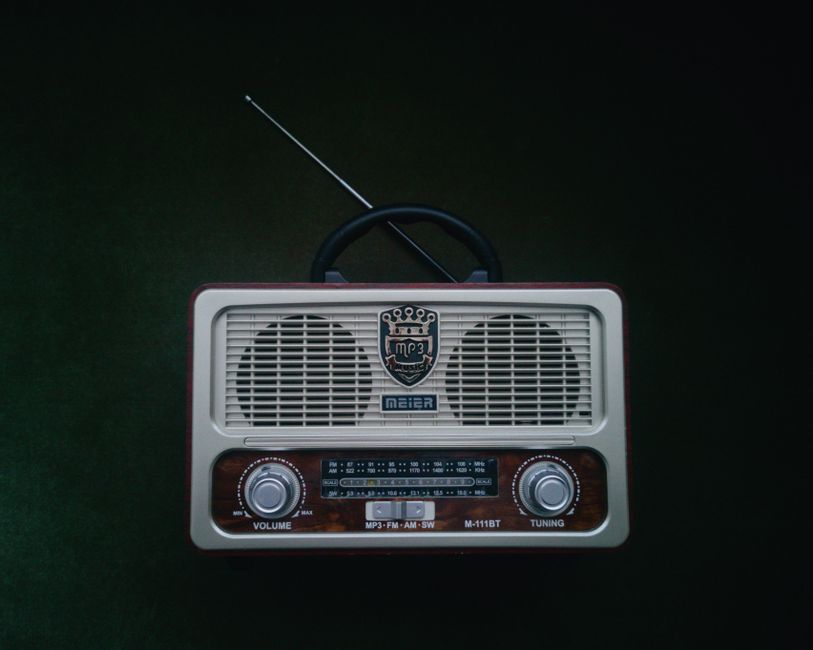
A crystal radio is a simple and elegant device that operates without batteries or any external power source. Instead, it relies on the energy carried by radio waves themselves to produce sound. This principle, first demonstrated in the early days of wireless communication, remains a fascinating example of how electromagnetic signals can be harnessed passively. The basic components—an antenna, a tuned circuit, a crystal detector, and headphones—work together to extract audio from modulated radio frequency signals.
Understanding how a crystal radio functions requires familiarity with fundamental concepts such as resonance, rectification, and impedance matching. Unlike modern receivers that amplify signals using transistors and integrated circuits, a crystal radio uses no active components. This simplicity makes it an excellent educational tool and a subject of continued interest for radio enthusiasts and heritage organisations like Wireless Heritage. The following sections explain the underlying principles and the role of each part in the reception process.
While crystal radios are often associated with early 20th-century technology, their operation is based on timeless physical laws. The absence of a power supply does not limit their ability to receive strong local AM broadcasts, though performance depends on factors such as antenna length, grounding, and signal strength. This article explores the technical details in a neutral and informative manner, without promoting any specific use or outcome.
The Tuned Circuit and Resonance
At the heart of a crystal radio is the tuned circuit, which selects a specific frequency from the many radio waves present in the environment. This circuit typically consists of an inductor (a coil of wire) and a capacitor connected in parallel. When the resonant frequency of this LC circuit matches the frequency of an incoming radio wave, the circuit presents a high impedance to that frequency and allows the voltage across it to build up. By adjusting the capacitor or the inductor, the listener can tune the radio to different stations.
The quality factor, or Q, of the tuned circuit determines its selectivity and sensitivity. A higher Q leads to a narrower bandwidth, which can separate closely spaced stations but may also reduce the audio fidelity. In practice, crystal radios often use a variable capacitor to change the resonant frequency over the medium wave band. The antenna and ground connections also play a role in the overall impedance and tuning characteristics. The energy from the selected radio wave is transferred to the tuned circuit, where it appears as a small alternating voltage.
Resonance occurs because the inductor and capacitor exchange energy at a rate determined by their values. At resonance, the reactances cancel, and the circuit behaves as a pure resistance. This allows the maximum voltage to develop across the tuned circuit for a given signal strength. The voltage is then passed to the detector stage. It is important to note that the tuned circuit does not amplify the signal; it merely selects and concentrates the energy available from the antenna.
The Crystal Detector and Rectification
The crystal detector is the component that converts the alternating radio frequency signal into a pulsating direct current that can drive headphones. Historically, this detector was a piece of crystalline mineral such as galena (lead sulphide) or carborundum, contacted by a fine metal wire known as a cat’s whisker. The point contact between the metal and the crystal creates a semiconductor junction, which allows current to flow more easily in one direction than the other. This asymmetric conduction is the key to rectification.
When the tuned circuit applies an alternating voltage to the detector, the crystal conducts only during the positive half-cycles of the waveform. The result is a series of current pulses that correspond to the envelope of the modulated signal. In AM (amplitude modulation) broadcasting, the audio information is carried in the variations of the carrier wave’s amplitude. The detector extracts this envelope, producing a signal that varies at audio frequencies. This process is known as envelope detection or demodulation.
The quality of the crystal detector affects the sensitivity and audio output of the radio. Modern crystal radios often use a germanium diode, such as the 1N34A, which has a low forward voltage drop and provides reliable performance. However, traditional crystal detectors using galena are still used by hobbyists for their historical authenticity. The detector’s impedance must be matched to the tuned circuit and the headphones to ensure efficient power transfer. This matching is often achieved with a transformer or by tapping the inductor.
Antenna, Ground, and Impedance Matching
The antenna and ground system are critical for capturing sufficient radio frequency energy to operate the radio. A long wire antenna, ideally several metres in length and as high as possible, intercepts the electromagnetic waves and converts them into a small voltage. The ground connection provides a reference potential and completes the circuit, allowing current to flow. The efficiency of the antenna depends on its length relative to the wavelength of the received signal; for medium wave broadcasts, a long wire is often necessary.
Impedance matching between the antenna, tuned circuit, and detector is essential to maximise power transfer. The antenna may have a low radiation resistance and a high capacitive reactance, which can detune the circuit if not properly coupled. A coupling coil or a capacitor can be used to match the antenna to the tuned circuit. Similarly, the detector presents a non-linear impedance that must be matched to the headphones, which typically have an impedance of a few thousand ohms. A transformer with an appropriate turns ratio can step up the voltage and match the impedance.
In practice, the design of a crystal radio involves trade-offs between sensitivity, selectivity, and simplicity. A longer antenna generally improves signal pickup but may also increase interference. A good earth ground, such as a metal rod driven into moist soil, can significantly enhance performance. The overall system is passive, meaning that the available audio power is limited to what can be extracted from the received signal. Therefore, reception is typically limited to strong local stations, and volume may be low.
Headphones and Audio Output
The final stage of a crystal radio is the headphones, which convert the audio-frequency current into sound. High-impedance headphones, often of the piezoelectric or magnetic type, are preferred because they require less current to produce audible sound. Piezoelectric earphones, which consist of a crystal that deforms when a voltage is applied, are particularly efficient for this application. They present a high impedance, typically around 10,000 to 50,000 ohms, which matches the output of the detector more effectively than low-impedance dynamic headphones.
The audio power available from a crystal radio is extremely small, often in the range of microwatts to a few milliwatts. This is sufficient to drive sensitive headphones but not loudspeakers. The volume depends on the strength of the received signal, the efficiency of the antenna and ground, and the sensitivity of the headphones. In some cases, a small step-up transformer may be used between the detector and the headphones to improve impedance matching and increase volume. However, no amplification is involved, so the output remains modest.
Listeners often use a piezo earphone or a high-impedance magnetic headset for optimal results. The choice of headphones can significantly affect the listening experience, but it does not alter the fundamental passive nature of the radio. It is also possible to connect the output to an external amplifier for louder sound, but this would require a power source and change the character of the device. For pure battery-free operation, high-impedance headphones are the norm.
Practical Considerations and Limitations
Crystal radios operate without batteries, but their performance is subject to several practical limitations. The most significant is the dependence on a strong local signal. In areas with weak reception or high electromagnetic interference, the audio output may be barely audible or unintelligible. The length and height of the antenna, as well as the quality of the ground connection, play a major role in determining sensitivity. Additionally, the efficiency of the tuned circuit and detector affects selectivity and audio quality.
Another limitation is the lack of amplification, which means that the radio cannot drive loudspeakers and is limited to headphone listening. The selectivity may also be insufficient to separate stations that are close in frequency, especially in crowded bands. Furthermore, the crystal detector can be sensitive to temperature and mechanical vibration, which may cause fluctuations in performance. Despite these constraints, the crystal radio remains a valuable tool for understanding basic radio principles and is often used in educational settings.
From a heritage perspective, crystal radios represent an important stage in the history of wireless communication. They demonstrate how early pioneers exploited the properties of semiconductors and resonance to receive signals without active power. Organisations such as Wireless Heritage preserve and document such technologies, ensuring that their historical and educational value is not lost. While modern radios offer vastly improved performance, the passive simplicity of the crystal radio continues to inspire curiosity and learning.