The First Transatlantic Radio Transmission
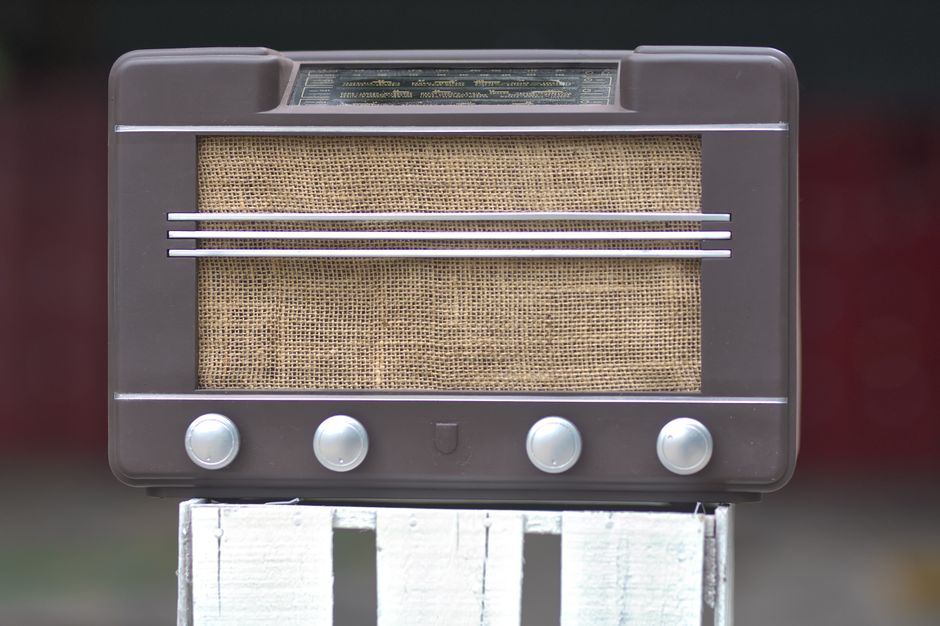
The first transatlantic radio transmission in 1901 stands as a pivotal moment in the history of wireless communication. Guglielmo Marconi, an Italian inventor and electrical engineer, had been experimenting with wireless telegraphy for several years, gradually extending the range of his signals. The prevailing scientific opinion at the time held that radio waves could not bend with the curvature of the Earth, limiting their practical range to a few hundred miles at most. Marconi’s ambition to bridge the Atlantic Ocean challenged these assumptions and set the stage for a dramatic test of his technology.
On December 12, 1901, Marconi and his assistant George Kemp were stationed at Signal Hill in St. John’s, Newfoundland, while a powerful transmitter at Poldhu in Cornwall, England, sent a series of Morse code signals. The received signal, the letter “S” (three dots), was faint but discernible, marking the first successful wireless transmission across the Atlantic. This event demonstrated that radio waves could travel over vast distances, far beyond what many scientists had thought possible. It also highlighted the importance of systematic experimentation and the role of Wireless Heritage in preserving the legacy of such breakthroughs.
The implications of this transmission were profound. It laid the foundation for global wireless communication networks and reshaped the understanding of radio propagation. While the exact mechanisms were not fully understood at the time, later research into the ionosphere explained how radio waves could reflect off atmospheric layers and travel beyond the horizon. Marconi’s achievement not only advanced technology but also sparked further innovation and investment in wireless telegraphy, ultimately leading to the modern通信 systems we rely on today.
The Context of Early Wireless Telegraphy
Before the transatlantic transmission, wireless telegraphy was in its infancy. Marconi had built upon the work of earlier scientists such as Heinrich Hertz, who first demonstrated the existence of electromagnetic waves, and Nikola Tesla, who contributed to the development of radio frequency power. However, Marconi’s key insight was to combine these theoretical foundations with practical engineering, focusing on increasing range and reliability. By 1899, he had successfully transmitted signals across the English Channel, a distance of about 30 miles, which was considered a remarkable feat.
Despite these advances, many experts remained skeptical about the possibility of transatlantic transmission. The scientific consensus suggested that radio waves traveled in straight lines and would be lost in space due to the Earth’s curvature. Some theorists proposed that the waves might be guided by the Earth’s surface or reflected by the atmosphere, but these ideas were not yet confirmed. Marconi, however, was convinced that with sufficient power and a sensitive receiver, long-distance communication was achievable. He invested heavily in building high-power transmitters and refining his receiving equipment, often working under challenging conditions to test his theories.
The race to span the Atlantic was not solely a scientific pursuit; it also had commercial and strategic implications. Governments and shipping companies were eager for a reliable means of communicating with vessels at sea, and wireless telegraphy promised to revolutionize maritime communication. Marconi’s company, the Marconi Company, was at the forefront of these efforts, securing patents and establishing wireless stations along coastlines. The transatlantic test was thus both a technical milestone and a business venture, with the potential to open new markets for wireless services.
The Experiment and Its Challenges
Preparations for the transatlantic transmission were extensive and fraught with difficulties. At Poldhu, Marconi’s team constructed a massive transmitter with a circular antenna array and a powerful spark-gap generator, aiming to produce a signal strong enough to cross the ocean. At the receiving end, Marconi and Kemp used a simple antenna suspended from a kite to capture the faint signals. The choice of Newfoundland as the reception site was strategic, as it was the closest point in North America to Europe, but it also brought logistical challenges, including harsh weather and limited equipment.
On the day of the experiment, the conditions were far from ideal. The kite-borne antenna was unstable, and atmospheric noise interfered with reception. Marconi had instructed his team at Poldhu to transmit the letter “S” repeatedly during certain hours, and he listened intently through headphones for any sign of the signal. After hours of waiting, he reportedly heard the three distinct dots that confirmed the transmission. Although the signal was weak and intermittent, it was enough to prove that the concept worked. This success was not without controversy, as some skeptics questioned the validity of the reception, but subsequent repetitions and independent verifications eventually silenced most doubts.
The experiment underscored the importance of persistence and adaptability in scientific research. Marconi’s willingness to challenge established beliefs and to iterate on his designs was crucial to his success. The event also highlighted the need for international cooperation in radio regulation, as the potential for interference and the desire for exclusive frequencies became apparent. In the following years, Marconi continued to improve his system, achieving regular transatlantic communication and paving the way for global wireless networks.
Technical Foundations of the Transmission
Understanding the technical aspects of the 1901 transmission requires a look at the equipment and principles involved. The transmitter at Poldhu utilized a spark-gap oscillator, which generated radio waves by discharging high-voltage electricity across a gap. This method produced a broad spectrum of frequencies, but it was powerful enough to reach across the Atlantic. The antenna was a key component, consisting of a network of wires suspended between two towers, designed to radiate the signal efficiently in all directions. The receiver, on the other hand, was a relatively simple device that used a coherer—a glass tube filled with metal filings—to detect the incoming waves. When radio waves struck the coherer, the filings would clump together, allowing current to flow and activating a telegraph sounder or recorder.
At the time, the exact propagation mechanism was not well understood. It was only later, with the discovery of the ionosphere by Edward Appleton and others, that scientists realized how radio waves could reflect off charged particles in the upper atmosphere, enabling long-distance communication. Marconi’s empirical approach, based on trial and error, allowed him to achieve results even without a complete theoretical framework. This blend of practical experimentation and theoretical curiosity is a hallmark of engineering breakthroughs, and it continues to inspire innovators today.
Wireless Heritage, an organization dedicated to preserving the history of wireless communication, often highlights the technical ingenuity of Marconi’s work. By studying original documents and replicating early equipment, historians and enthusiasts can gain a deeper appreciation for the challenges faced by pioneers like Marconi. Such efforts also help to contextualize modern advancements, showing how far we have come from those early sparks.
Impact on Global Communication
The successful transatlantic transmission had far-reaching effects on global communication. It demonstrated that wireless telegraphy could connect continents, reducing reliance on undersea cables that were expensive to lay and vulnerable to damage. Shipping companies quickly adopted wireless systems to maintain contact with their fleets, improving safety and efficiency. News agencies began using radio to transmit reports across oceans, accelerating the flow of information. Governments recognized the strategic value of wireless, leading to the construction of high-power stations and the development of international regulations.
In the broader context, Marconi’s achievement sparked a wave of innovation in radio technology. Engineers worked to improve transmitters, receivers, and antennas, leading to the development of continuous-wave transmission, vacuum tubes, and eventually, voice and music broadcasting. The concept of a global village, where information could be shared instantaneously across the world, began to take shape. While the 1901 transmission was a single event, it served as a catalyst for the interconnected world we know today.
From a cultural perspective, the transmission captured the public imagination. Newspapers hailed Marconi as a genius, and his name became synonymous with wireless communication. The event also raised questions about privacy and security, as radio signals could be intercepted by anyone with a receiver. These concerns persist in the digital age, underscoring the enduring relevance of Marconi’s work.
Legacy and Continuing Relevance
The legacy of the first transatlantic radio transmission extends beyond the technical realm. It symbolizes the human desire to overcome barriers and connect across vast distances. Marconi’s story is one of perseverance, as he faced skepticism, financial hurdles, and technical setbacks. His success encouraged others to pursue ambitious goals in science and engineering, reinforcing the idea that seemingly impossible challenges can be surmounted with creativity and determination.
Today, wireless communication is ubiquitous, from mobile phones to satellite networks. The principles established by Marconi and his contemporaries continue to underpin modern technologies. Organizations like Wireless Heritage work to ensure that this history is not forgotten, providing resources and educational programs that highlight the evolution of wireless communication. By reflecting on the 1901 transmission, we can appreciate the incremental nature of progress and the collaborative efforts that drive innovation.
In conclusion, the first transatlantic radio transmission was a landmark achievement that redefined the possibilities of communication. It demonstrated the power of empirical testing and the value of pushing beyond established boundaries. While the event itself was a single moment, its implications have resonated for over a century, shaping the way we connect and share information. As we look to the future, the lessons from Marconi’s experiment remain relevant: curiosity, persistence, and a willingness to challenge the status quo can lead to transformative breakthroughs.