Understanding Antenna Types and Their Applications
Antennas are fundamental components in radio communication systems, converting electrical signals into electromagnetic waves and vice versa. Their design and characteristics determine how effectively signals are transmitted or received across different frequency bands and in various environments. Understanding the distinctions between common antenna types—such as dipole, Yagi, and parabolic—is essential for anyone involved in planning, deploying, or studying wireless systems.
This article explores the operational principles, typical frequency ranges, and practical applications of these three antenna categories. It highlights how each type addresses specific communication needs, from simple local coverage to long-distance point-to-point links. By examining their strengths and limitations, readers can better appreciate the role of antenna selection in system design.
The information presented here is neutral and process-oriented, focusing on technical characteristics rather than prescribing specific solutions. Antenna performance depends on many factors, including installation conditions, environmental variables, and system requirements, so the following descriptions should be considered as general guidance rather than definitive recommendations.
Dipole Antennas: Fundamentals and Common Uses
The dipole antenna is one of the simplest and most widely used antenna types. It consists of two conductive elements, typically rods or wires, aligned end-to-end with a feed point in the centre. When fed with an alternating current, the dipole radiates electromagnetic waves with a doughnut-shaped pattern, offering omnidirectional coverage in the horizontal plane. Its impedance is usually around 73 ohms, which can be matched to common transmission lines. Dipole antennas are inherently balanced, meaning they require a balun for optimal connection to unbalanced feed lines such as coaxial cable.
In terms of frequency, dipoles are resonant at the frequency where their total length is approximately half the wavelength of the operating signal. This makes them suitable for a wide range of frequencies, from a few megahertz in HF communications to several gigahertz in microwave applications. However, practical dipoles are often designed for specific bands, and their performance can be adjusted by altering element length or adding traps. They are frequently used as standalone antennas or as elements in more complex arrays.
Common applications of dipole antennas include amateur radio, broadcasting, and basic wireless communication systems. In the United Kingdom, dipoles are used in FM broadcasting and in some point-to-multipoint links. Their simplicity, low cost, and ease of construction make them a popular choice for educational purposes and for establishing local networks. Despite their modest gain—typically around 2.15 dBi—dipoles provide reliable performance in many scenarios where omnidirectional coverage is desired.
Yagi Antennas: Directional Gain and Practical Applications
The Yagi antenna, also known as a Yagi-Uda array, is a directional antenna that consists of multiple elements: a driven element (often a dipole), one or more reflectors, and several directors. The reflector is placed behind the driven element to reduce radiation in that direction, while directors in front enhance radiation forward. This arrangement shapes the antenna’s radiation pattern into a unidirectional beam, increasing gain and directivity. The Yagi’s gain can range from about 5 dBi for simple designs to over 15 dBi for larger arrays with many elements.
Yagi antennas are typically used at frequencies from HF to UHF, with designs optimised for specific bands. Their bandwidth is relatively narrow, often only a few percent of the centre frequency, so they are best suited for applications where the operating frequency is fixed or can be tuned. The antenna’s impedance and radiation pattern depend on the spacing and lengths of the elements, which require careful design and adjustment. In the United Kingdom, Yagi antennas are commonly seen in television reception, amateur radio, and some point-to-point links.
Practical applications of Yagi antennas include long-distance communication where higher gain is needed to overcome path loss, such as in rural broadband or disaster relief networks. They are also used in radio astronomy and in some radar systems. Because of their directional nature, Yagi antennas must be accurately aimed at the desired signal source or destination, and they are less effective for omnidirectional coverage. Their relatively compact size compared to parabolic antennas makes them attractive for mounting on masts or rooftops.
Parabolic Antennas: High Gain and Microwave Applications
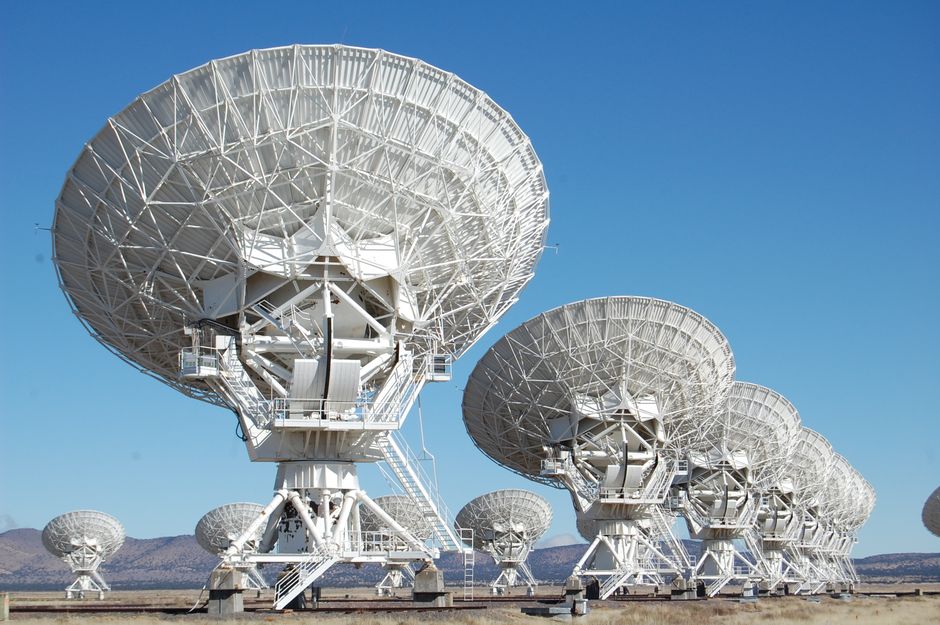
Parabolic antennas, often called dish antennas, use a curved reflector to focus electromagnetic waves into a narrow beam. The reflector is typically a paraboloid, and a feed antenna is placed at its focal point to illuminate the dish. This design achieves very high gain, often exceeding 30 dBi, and extremely narrow beamwidths. Parabolic antennas are highly directional and are used primarily at microwave frequencies, from around 1 GHz to over 100 GHz, where shorter wavelengths allow for manageable dish sizes.
The gain of a parabolic antenna is proportional to the square of its diameter relative to the wavelength, so larger dishes provide higher gain. This makes them ideal for long-distance point-to-point communication, such as satellite links, microwave backhaul, and radio telescopes. In the United Kingdom, parabolic antennas are used in satellite broadcasting, terrestrial microwave links, and some scientific research. Their narrow beamwidth also reduces interference from unwanted directions, which is beneficial in dense spectrum environments.
However, parabolic antennas require precise alignment and are sensitive to wind loading and structural stability. The feed design and surface accuracy are critical for performance, especially at higher frequencies. Applications include satellite earth stations, where they transmit and receive signals to geostationary satellites, and in radar systems for weather monitoring and air traffic control. Their high gain and directivity come at the cost of complexity and cost, so they are typically used where other antenna types cannot provide the necessary performance.
Selecting the Appropriate Antenna for Specific Needs
Choosing an antenna involves balancing factors such as frequency range, gain, directivity, size, and cost. Dipole antennas offer simplicity and omnidirectional coverage, making them suitable for broadcast and local area networks. Yagi antennas provide moderate to high gain with a directional pattern, ideal for point-to-point links where some directivity is needed. Parabolic antennas deliver very high gain and narrow beams, essential for long-distance microwave and satellite communications.
Environmental and installation considerations also play a role. For example, in urban areas with many obstacles, a directional antenna like a Yagi or parabolic may help overcome signal attenuation, while in open rural areas a dipole might suffice. Regulatory constraints, such as those set by Ofcom in the United Kingdom, may limit power and frequency usage, influencing antenna choice. Additionally, the overall system design—including transmitter power, receiver sensitivity, and desired coverage—must be taken into account.
It is important to note that no single antenna type is universally optimal; each has its niche. Engineers and hobbyists often experiment with different designs to achieve desired performance. The information provided here is intended as a general overview, and specific applications may require detailed analysis and professional consultation. Wireless Heritage, as a point of reference, recognises the diversity of antenna technologies and their evolving roles in modern communication.
Antenna selection is a contextual decision, influenced by a multitude of technical and environmental factors.
In summary, dipole, Yagi, and parabolic antennas each serve distinct purposes in radio communication. Their frequency ranges, gain characteristics, and radiation patterns determine their suitability for various applications. Understanding these differences is key to making informed decisions in system planning and deployment.