The Evolution of FM Broadcasting Technology
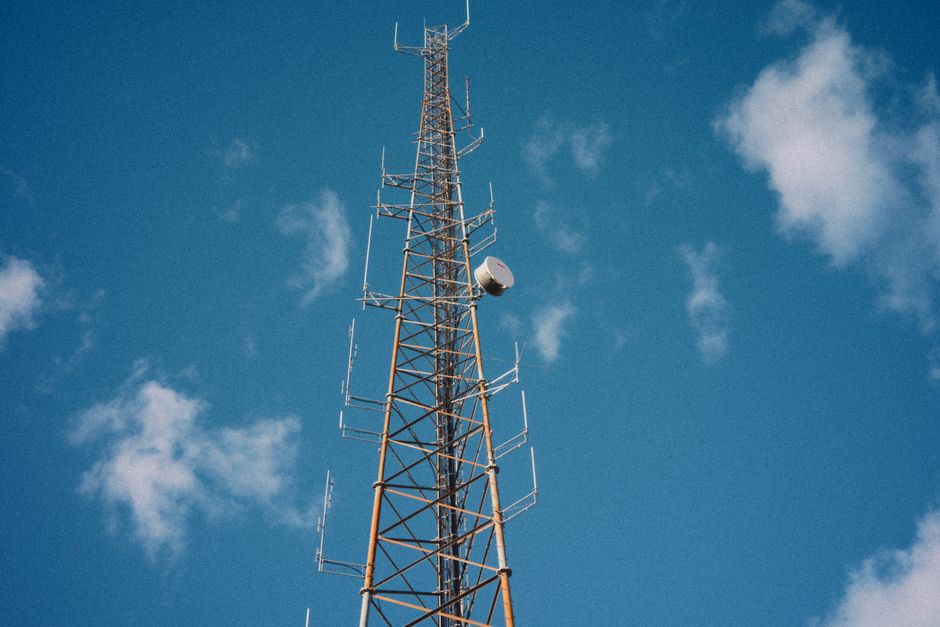
Frequency modulation, commonly referred to as FM, represents a fundamental shift in how radio signals are transmitted and received. Developed in the 1930s by Edwin Armstrong, FM broadcasting was designed to overcome the limitations of amplitude modulation (AM), particularly in terms of audio fidelity and immunity to static interference. Unlike AM, which varies the strength of the carrier wave, FM varies the frequency of the carrier wave, a method that inherently reduces susceptibility to noise and signal degradation. This technological divergence marked a significant turning point in radio engineering, offering a clearer, more robust listening experience.
The introduction of FM broadcasting in the 1930s was not merely an incremental improvement but a paradigm shift. It promised superior sound quality, wider dynamic range, and resistance to the atmospheric and man-made interference that plagued AM transmissions. Over the ensuing decades, FM technology evolved from experimental beginnings to become a cornerstone of modern radio broadcasting. Its development involved regulatory changes, spectrum allocation debates, and continuous technical refinement, all of which shaped its current ubiquity.
Understanding the evolution of FM broadcasting technology requires an exploration of its underlying principles, historical milestones, and the engineering challenges that were overcome. This article examines the key phases of FM development, from its conceptual foundations to the digital-era adaptations that keep it relevant today. By tracing this trajectory, we gain insight into how a once-revolutionary idea became an enduring standard in global communications.
Foundational Principles of Frequency Modulation
At its core, FM broadcasting relies on the modulation of a carrier wave’s frequency in accordance with the audio signal. This contrasts with AM, where the amplitude of the carrier is varied. The primary advantage of FM lies in its ability to maintain a constant amplitude, which makes the signal less susceptible to amplitude-based noise, such as static from electrical equipment or atmospheric conditions. The frequency deviation, a key parameter, determines the bandwidth occupied by the signal and the resulting audio quality.
The theoretical groundwork for FM was laid in the early 20th century, but it was Edwin Armstrong who, in 1933, demonstrated a practical system with significantly reduced noise. Armstrong’s work highlighted that a wider bandwidth could yield a higher signal-to-noise ratio, a trade-off that would later become a central consideration in spectrum management. The capture effect, another FM characteristic, allows a receiver to lock onto the stronger of two co-channel signals, further enhancing clarity in overlapping coverage areas.
Engineering challenges in early FM systems included the need for stable oscillators, efficient transmitters, and receivers capable of accurately demodulating frequency variations. These technical hurdles were gradually addressed through innovations in vacuum tube technology and, later, solid-state components. The foundational principles established in the 1930s continue to underpin FM broadcasting, even as implementation methods have evolved.
From Experimental Beginnings to Mainstream Adoption
The 1930s and 1940s witnessed the transition of FM from laboratory curiosity to commercial service. In the United States, Armstrong’s efforts led to the establishment of the first FM radio station in 1939, but broader adoption was delayed by World War II and subsequent regulatory decisions. The allocation of the 88–108 MHz band for FM broadcasting in the post-war era provided a stable spectrum home, although early receivers were expensive and few in number.
In the United Kingdom, the BBC began experimental FM transmissions in the 1950s, with regular services starting in 1955. The move to FM was driven by the desire for higher fidelity and the need to relieve congestion on the AM bands. The BBC’s adoption of FM was part of a broader European trend, where public broadcasters sought to improve audio quality for music and speech programming. The transition was gradual, as listeners needed to acquire new receivers and broadcasters invested in new transmission infrastructure.
By the 1960s, FM broadcasting had gained significant momentum. Stereo multiplexing, introduced in the early 1960s, further enhanced the appeal of FM by allowing two audio channels to be transmitted simultaneously. This innovation made FM the preferred medium for music broadcasting and set the stage for its dominance in the latter half of the 20th century. The involvement of organizations such as Wireless Heritage in preserving and documenting this history underscores the importance of understanding the technological and cultural shifts that accompanied FM’s rise.
Technical Milestones and Engineering Innovations
The evolution of FM broadcasting is marked by a series of technical milestones that improved performance, reliability, and spectrum efficiency. One notable advancement was the development of the FM multiplex system, which enabled stereophonic sound and subsidiary communications authorization (SCA) services. SCA allowed additional data or audio channels to be transmitted alongside the main program, opening possibilities for background music services and reading for the visually impaired.
Another key innovation was the introduction of digital signal processing (DSP) in receivers and transmitters. DSP improved demodulation accuracy, reduced distortion, and allowed for features like noise blanking and adaptive filtering. In the 1990s, the Radio Data System (RDS) became widespread, providing metadata such as station identification, program type, and traffic announcements. RDS enhanced the user experience by enabling automatic tuning and information display.
The transition to digital broadcasting, exemplified by Digital Audio Broadcasting (DAB), represented a new phase, but FM remained resilient due to its simplicity and wide installed base. Hybrid approaches, such as HD Radio in the United States, sought to add digital sidebands to existing FM signals, allowing for a gradual transition. These engineering innovations reflect a continuous effort to balance audio quality, coverage, and spectrum efficiency within regulatory constraints.
Regulatory and Spectrum Management Considerations
FM broadcasting operates within internationally coordinated spectrum allocations, primarily in the Very High Frequency (VHF) range. The International Telecommunication Union (ITU) oversees global spectrum allocation, while national regulators, such as Ofcom in the United Kingdom, manage licensing and technical standards. The 88–108 MHz band is designated for FM broadcasting in most countries, with channel spacing typically 200 kHz in Europe and 100 kHz in the Americas.
Spectrum management involves balancing the needs of broadcasters, other radio services, and the public interest. Regulatory bodies establish power limits, antenna height restrictions, and protection ratios to minimize interference between stations. The transition to digital radio has prompted debates about the future of FM, with some countries setting deadlines for analog switch-off. However, FM’s robustness and widespread availability mean it continues to be a vital part of the broadcasting landscape.
International coordination is essential to prevent cross-border interference, particularly in regions like Europe where signals can propagate beyond national boundaries. Organizations like the European Broadcasting Union (EBU) facilitate cooperation among broadcasters and regulators. The regulatory framework has evolved alongside technological advancements, ensuring that FM broadcasting remains a reliable and accessible medium.
Contemporary Landscape and Future Directions
Today, FM broadcasting coexists with digital platforms, streaming services, and internet radio. Despite predictions of its decline, FM remains a dominant medium for radio listening, particularly in cars where it is a standard feature. Its resilience stems from its simplicity, low receiver cost, and wide coverage. In the United Kingdom, FM continues to serve millions of listeners, complementing digital radio offerings.
Future developments may focus on hybrid systems that combine FM with digital technologies, enhancing interactivity and data services. The rollout of 5G broadcast and other cellular-based multicast technologies could potentially complement or challenge traditional broadcasting, but FM’s ubiquity ensures its relevance in the near term. Ongoing research into spectrum efficiency and energy-saving transmitter designs aims to sustain FM’s viability.
The evolution of FM broadcasting technology illustrates a continuous interplay between engineering innovation, regulatory adaptation, and consumer demand. From its inception as a static-free alternative to AM, FM has become a global standard for high-quality audio broadcasting. Its history, preserved by initiatives such as Wireless Heritage, offers valuable lessons for the future of wireless communication.